adidas my home_
adidas my home
a collaboration with Camilla Maffei & Sophia M. Jarvis
client: final project IED for ADIDAS
location: - - -
year: 2018
type: set up
status: concept
IT
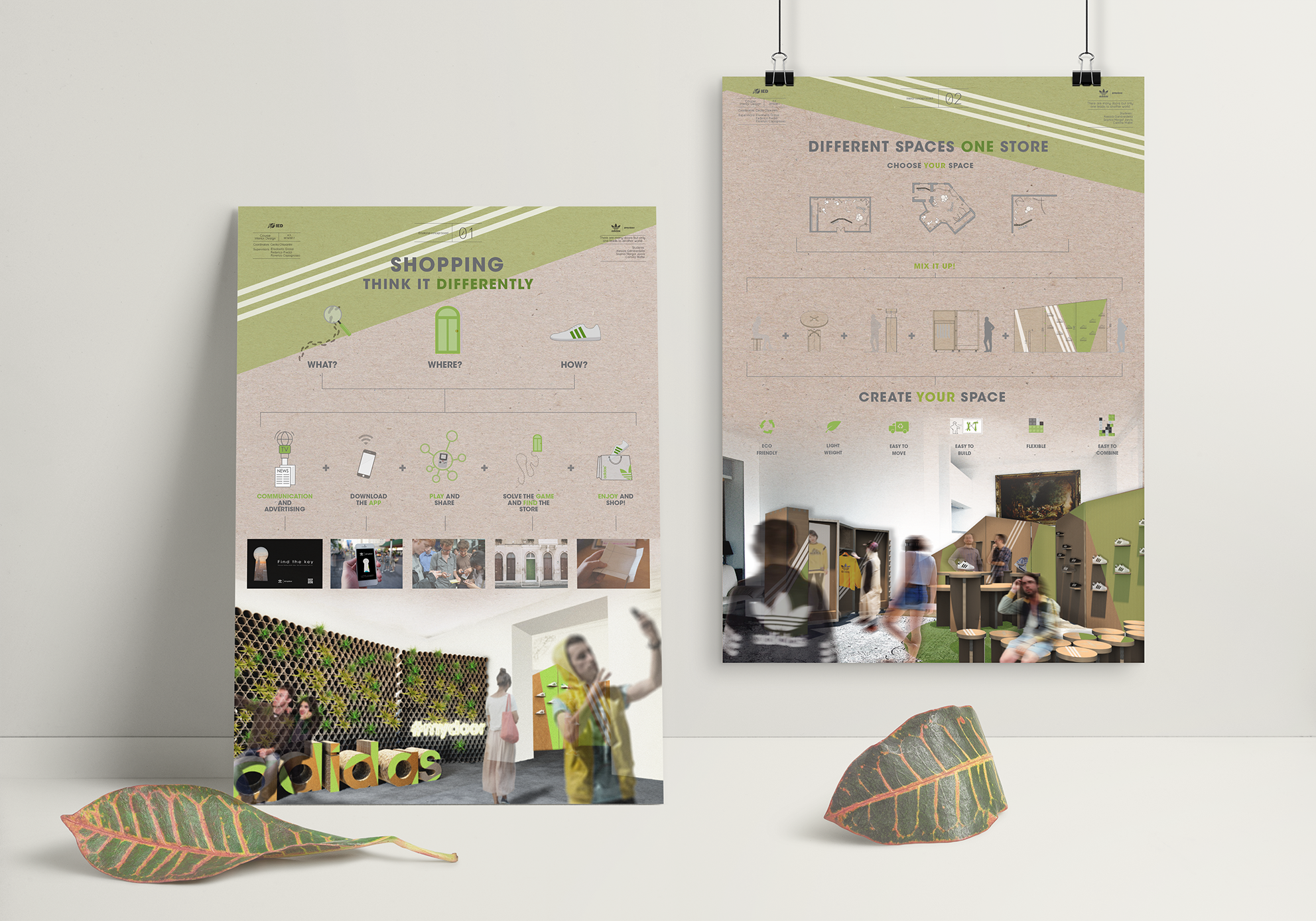
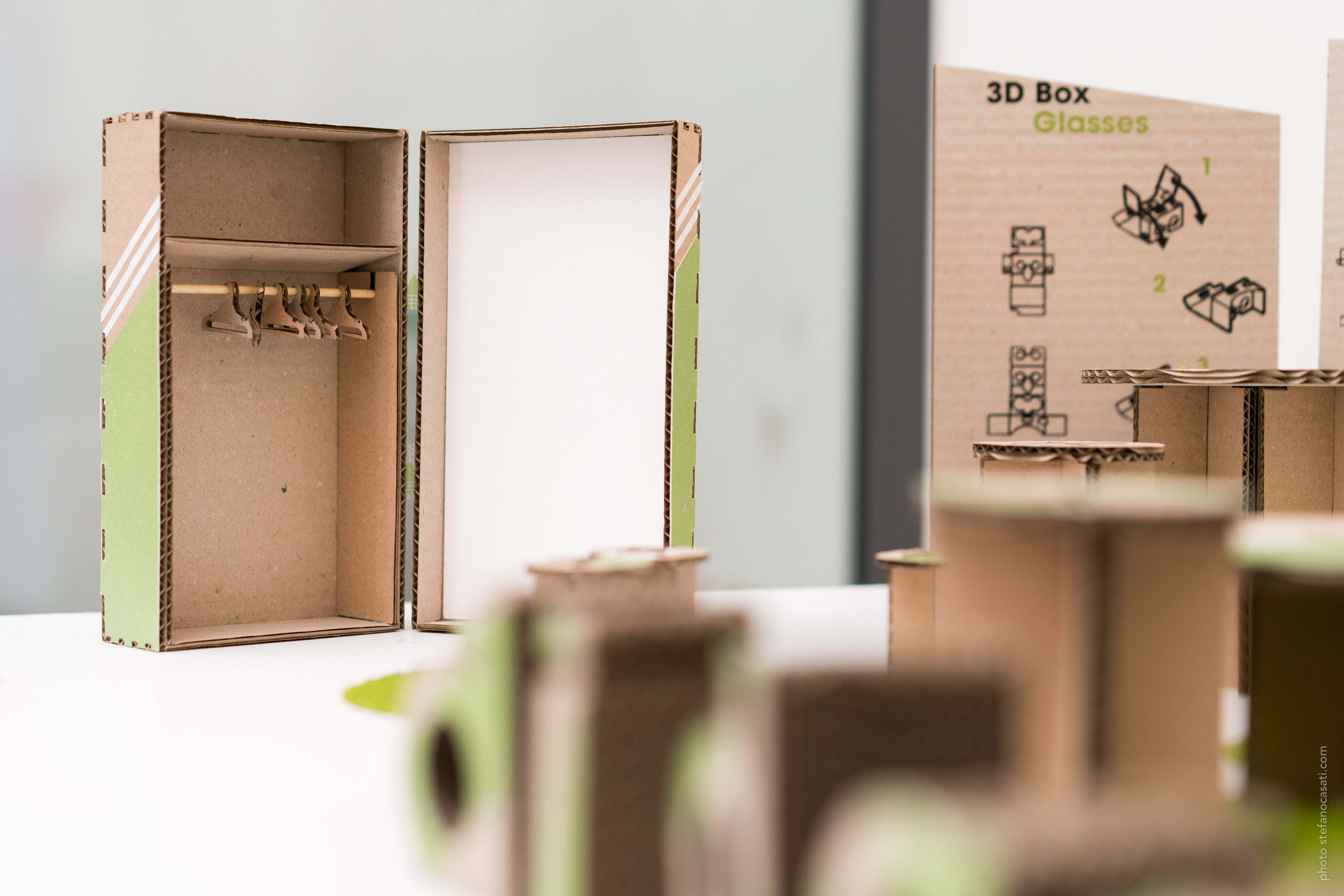
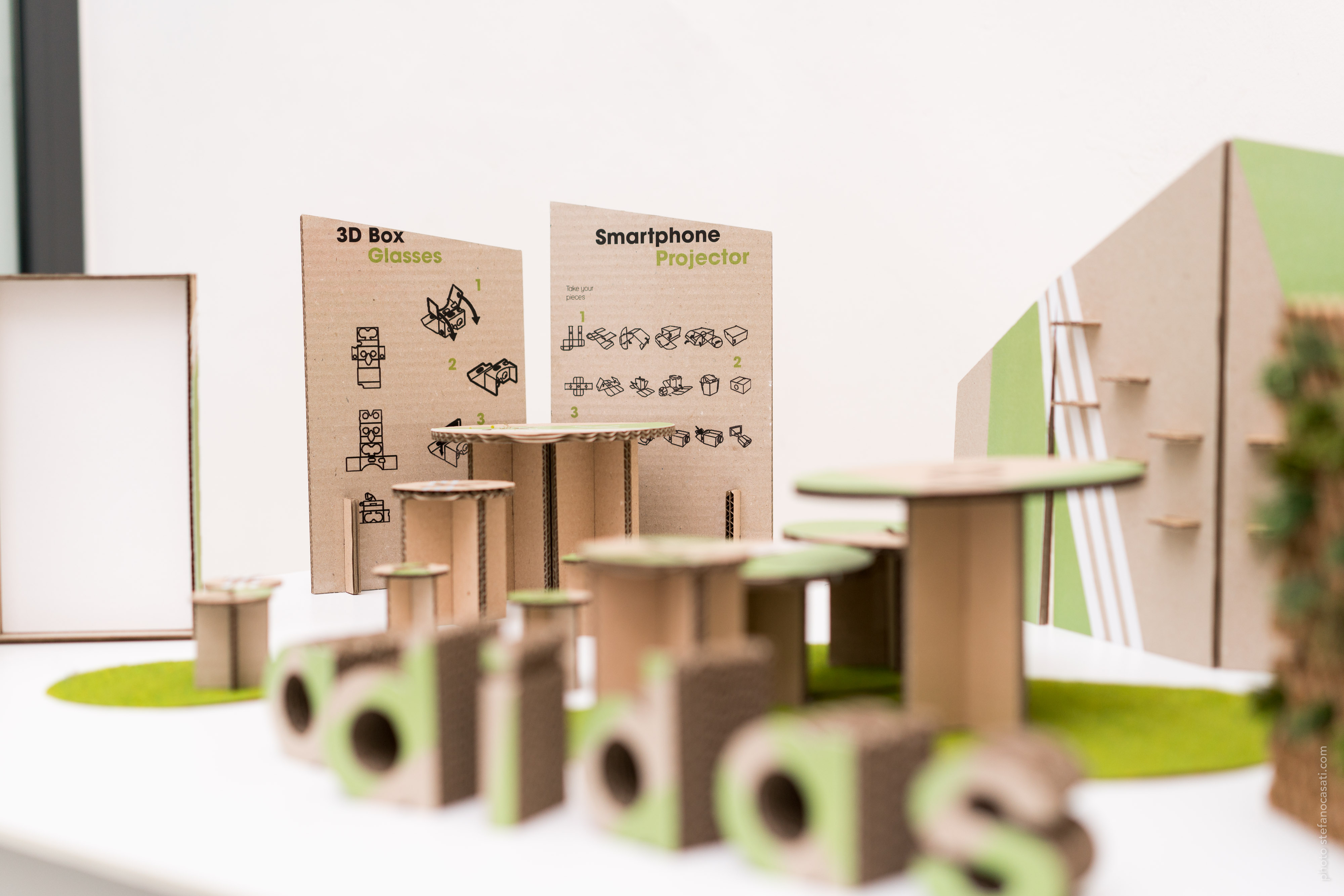
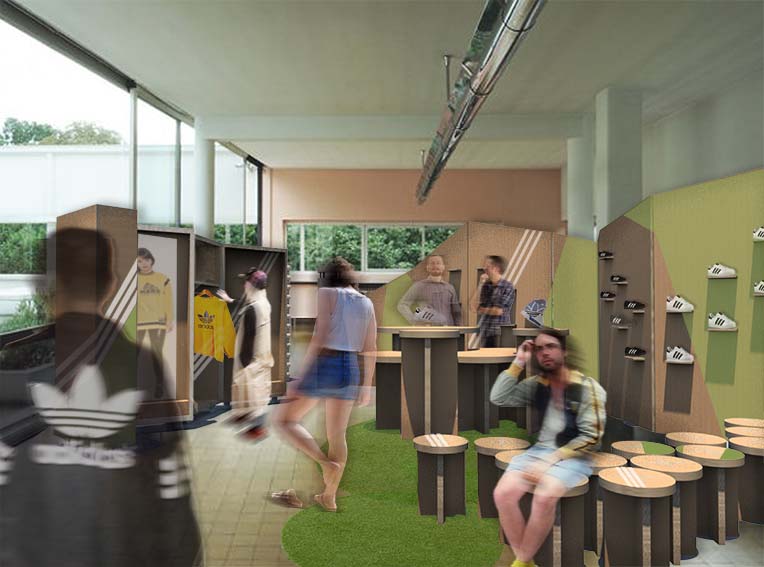
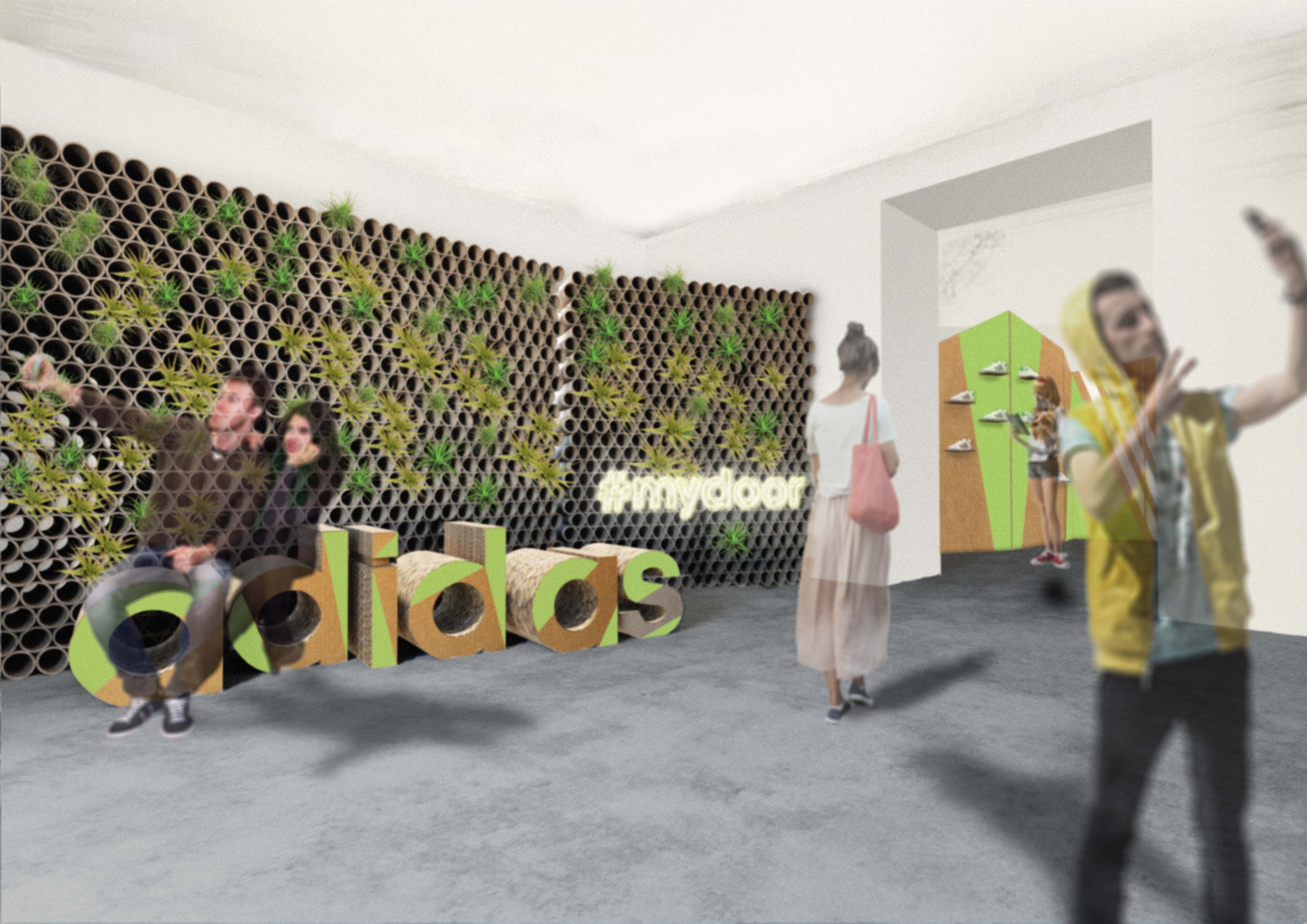
"Cartone pressato, strutture componibili, facili da montare e leggere da trasportare, integrate con tecnologie 4.0: lo store del futuro è sostenibile, si trova solo tramite una app per smartphone e parla alla Generazione Z. Il progetto, pensato per Adidas, è stato elaborato da Camilla Maffei, Alessia Gambardella e Sophia Jarvis, studentesse Ied in Interior Design, e presentato oggi a Firenze in occasione dell’Open Day dell’Istituto Europeo di Design. Il flagship store che piace ai Millennials rivoluziona in molti modi il classico concetto di negozio: prima di tutto non ti viene a cercare, aprendo le sue vetrine in una strada transitata, ma si nasconde tra le pieghe della città e si lascia scovare solo dopo una sorta di caccia al tesoro digitale, guidata da una app per smartphone e indizi disseminati in città. In secondo luogo è pensato come qualcosa di temporaneo, facilmente smontabile e trasferibile, componibile con moduli dotati di ruote. Spariscono anche le tradizionali pareti, sostituite da strutture tubolari modulabili. Sedute e camerini prova sono in cartone pressato, mentre gli appendiabiti sono intelligenti, reagiscono agli impulsi e sono in grado di comunicare live la disponibilità di colori e taglie a chi solleva un capo. Prevista anche un’area workshop, totalmente autogestita dai giovani clienti: un’area dove creare, in totale autonomia, il proprio gadget hi-tech. Seguendo dei semplici tutorial sarà possibile realizzare un proiettore per smartphone (per rivedere le proprie foto e i video a tutta parete), un paio di occhiali per la realtà aumentata o degli amplificatori audio. Tutto in cartone, naturalmente. Il modello in scala del flagship store per l aGen-Z è esposto nella sede fiorentina dello IED (via Bufalini 6r), insieme agli altri progetti di tesi realizzati dagli studenti in collaborazione con grandi aziende internazionali, tra cui anche Flyng Tiger Copenhagen e Furla."
EN
"Pressed cardboard, modular structures, easy to assemble and light to transport, integrated with 4.0 technologies: the store of the future is sustainable, it can only be found via a smartphone app and speaks to Generation Z. The project, designed for Adidas, is designed by Camilla Maffei, Alessia Gambardella and Sophia Jarvis, IED students in Interior Design, and presented today in Florence on the occasion of the European Institute of Design's Open Day. The flagship store that Millennials like revolutionizes the classic concept in many ways shop: first of all it does not come looking for you, opening its windows in a busy street, but hides in the folds of the city and can only be discovered after a sort of digital treasure hunt, guided by a smartphone app and clues scattered around the city. Secondly it is thought of as something temporary, easily removable and transferable, modular with modules equipped with wheels. Even the traditional walls disappear, tuite by modular tubular structures. Seats and fitting rooms are made of pressed cardboard, while the hangers are intelligent, react to impulses and are able to communicate live the availability of colors and sizes to those who lift a garment. There is also a workshop area, totally self-managed by young customers: an area where you can create your own hi-tech gadget in total autonomy. By following some simple tutorials it will be possible to create a smartphone projector (to review your photos and videos across the wall), a pair of glasses for augmented reality or audio amplifiers. All in cardboard, of course. The scale model of the flagship store for aGen-Z is exhibited in the Florentine headquarters of the IED (via Bufalini 6r), together with the other thesis projects carried out by the students in collaboration with large international companies, including Flyng Tiger Copenhagen and Furla. "
ES
"Cartón prensado, estructuras modulares, fáciles de montar y ligeras de transportar, integradas con tecnologías 4.0: la tienda del futuro es sostenible, solo se puede encontrar a través de una aplicación de smartphone y habla a la Generación Z. El proyecto de tesis para Adidas, está diseñado por Alessia Gambardella, Sophia Jarvis y Camilla Maffei, estudiantes del IED en Diseño de Interiores, y presentado hoy en Florencia, Jornada de Puertas Abiertas del Instituto Europeo de Diseño. El flagship store que gusta a los Millennials revoluciona el concepto clásico en muchos sentidos shop: En primer lugar, no viene a buscarte, abre sus ventanas en una calle de la ciudad escondida a los demás y solo se puede descubrir después de una especie de búsqueda del tesoro digital, guiada por una aplicación de teléfono inteligente y pistas esparcidas por el ciudad. En segundo lugar, se piensa como algo temporal, fácilmente desmontable y transferible, y con piezas con módulos equipados con ruedas. Hasta las paredes tradicionales desaparecen sustituidas por estructuras tubulares modulares. Los asientos y probadores son de cartón prensado, mientras, las perchas son inteligentes reaccionan a los impulsos y son capaces de comunicar en directo la disponibilidad de colores y tallas a quien levanta una prenda. También hay un área de taller, totalmente autogestionada por clientes jóvenes: un área donde puedes crear tu propio gadget de alta tecnología con total autonomía. Siguiendo unos sencillos tutoriales será posible crear un proyector de smartphone (para revisar tus fotos y vídeos en la pared), un par de gafas para realidad aumentada o amplificadores de audio. Todo en cartón, por supuesto. La maqueta de la flagship store de aGen-Z se exhibe en la sede florentina del IED (vía Bufalini 6r), junto con el resto de proyectos de tesis realizados por los alumnos en colaboración con grandes empresas internacionales, como Flyng Tiger Copenhagen y Furla . "